7 Simple Steps to Poor Drainage Solutions
Waterlogged roots suffocate within hours. Garden beds transform into stagnant pools after moderate rainfall, and foundation plantings rot at the crown. These failures stem from preventable soil structure problems. Implementing steps to poor drainage solutions begins with understanding that water must move downward through the profile at a rate of at least 1 inch per hour, or roots will drown in anaerobic conditions that foster Phytophthora and Pythium pathogens.
Soil compaction, clay lenses, and hardpan layers create impermeable barriers. The cation exchange capacity of heavy clay exceeds 40 meq/100g, but the particle size prevents adequate macropore space. Oxygen diffusion rates drop below 20 µg/cm²/min, the threshold for healthy root respiration. Correcting these conditions requires mechanical intervention, organic matter incorporation, and strategic grading. The following seven steps to poor drainage solutions address both immediate waterlogging and long-term soil health.
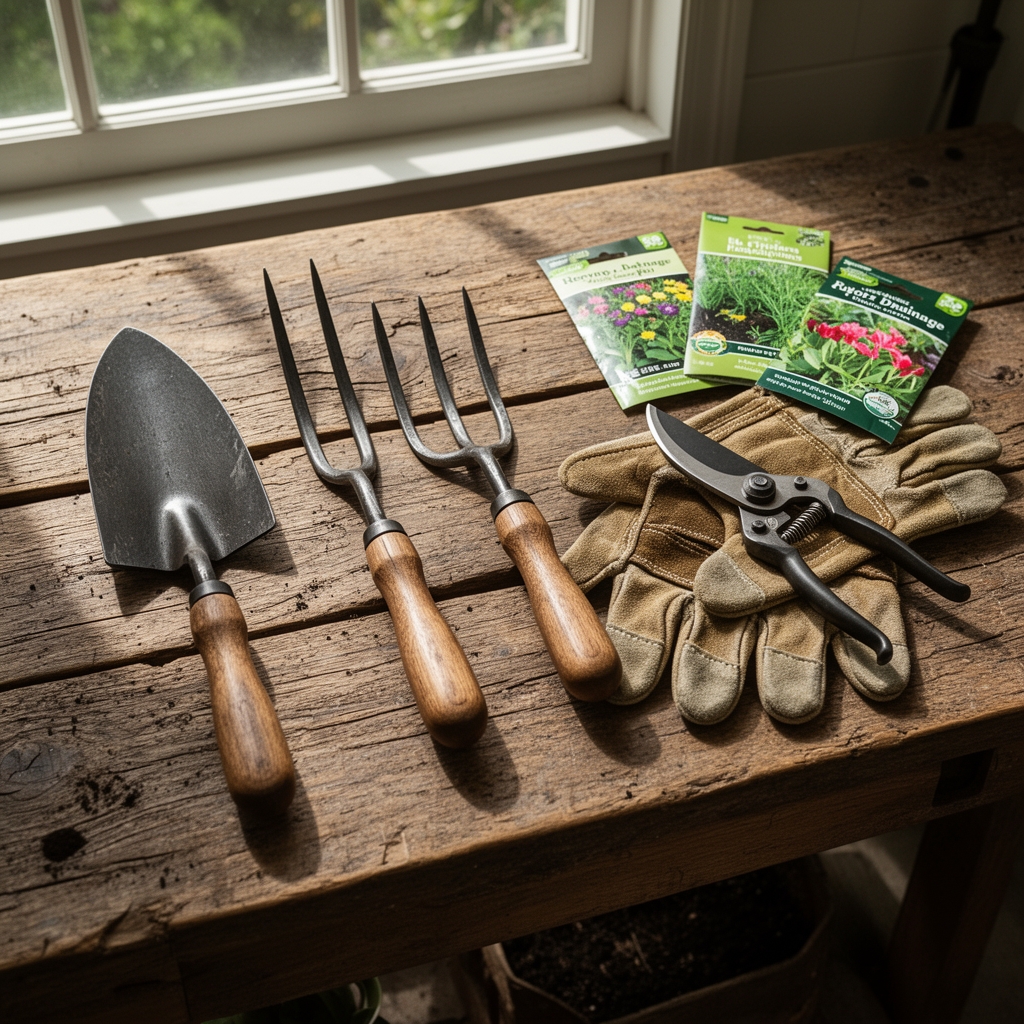
Materials
Coarse sand with particle diameter of 0.5-2.0 mm improves pore space without adding nutrients. Avoid fine sand, which behaves like silt and worsens compaction. Aged pine bark fines at 3/8-inch size contribute carbon while maintaining structure for 3-4 years before decomposition. Compost at pH 6.5-7.0 with an NPK ratio of approximately 1-1-1 provides slow-release nutrients and improves aggregation through humic acid formation.
Gypsum (calcium sulfate) at 40 pounds per 1,000 square feet flocculates clay particles in sodic soils without altering pH. Test sodium adsorption ratio before application. Perlite or pumice at 1/4-inch grade works in confined beds where weight matters. For amendments with higher fertility, use feather meal (12-0-0), bone meal (3-15-0), or kelp meal (1-0.5-2.5). Incorporate mycorrhizal fungi inoculant containing Glomus intraradices at transplant for enhanced phosphorus uptake in amended zones.
Perforated drain tile requires 4-inch diameter PVC with sock filtration. Gravel for French drains must be 3/4-inch crushed stone, never pea gravel, which migrates into pipe perforations.
Timing
Conduct steps to poor drainage solutions during the dormant season in Zones 6-9, typically November through February. Soil workability improves when moisture content sits at 50-60% field capacity. Working saturated soil creates dense clods that harden into brick-like aggregates. In Zones 3-5, perform modifications in early September before first frost, allowing 6-8 weeks for settling before winter.
Spring corrections must finish 4 weeks before last frost date. Disturbed soil needs time to stabilize before root systems establish. In Zones 10-11, schedule work during the dry season, avoiding the monsoon period when trenches collapse and amendments wash away.
Phases

Step 1: Assessment
Test percolation rate by digging a hole 12 inches deep and 12 inches wide. Fill with water and allow complete drainage. Refill and measure the drop over one hour. Rates below 1 inch per hour indicate poor drainage. Note the depth where water stops descending, revealing the restrictive layer.
Step 2: Surface Grading
Create slopes of 2-3% away from structures. Use a 4-foot level and calculate rise over run. Every 10 feet of horizontal distance requires 2.4-3.6 inches of drop. Remove sod and topsoil separately. Stockpile for replacement after subgrade work.
Step 3: Breaking Compaction
Rip the soil to 18-24 inches using a subsoiler or broadfork. Space tines 12 inches apart. This shatters plow pans and clay lenses. In severe cases, double-dig the entire bed, moving subsoil to the surface and burying topsoil temporarily.
Pro-Tip: Perform deep tillage when soil moisture content reaches 40% field capacity. Clay at this consistency fractures rather than smears.
Step 4: Organic Matter Integration
Spread 4 inches of aged compost and 2 inches of pine bark across the worked area. Incorporate to a depth of 12 inches. Target organic matter content of 5-8% by volume in the root zone. This increases porosity by 15-25% in clay soils.
Pro-Tip: Inoculate amendments with Trichoderma harzianum at 1 x 10^6 CFU per cubic foot to suppress root rot fungi during the establishment period.
Step 5: Drainage Installation
Install French drains at the lowest point, positioning perforated pipe 18-24 inches deep on a 1% grade. Surround pipe with 6 inches of 3/4-inch crushed stone wrapped in landscape fabric. Outlet to daylight, rain garden, or dry well located at least 10 feet from foundations.
Step 6: Soil Replacement
Return topsoil mixed 1:1 with compost. Create final grade 1-2 inches high to account for settling. Avoid walking on prepared beds.
Pro-Tip: Apply granular sulfur at 5 pounds per 1,000 square feet if pH exceeds 7.5, targeting 6.0-6.8 for most ornamentals.
Step 7: Planting and Mulching
Select species tolerant of occasional moisture fluctuation. Set root balls 1-2 inches above grade. Apply 3 inches of shredded hardwood mulch, keeping material 3 inches from stems to prevent crown rot.
Pro-Tip: Water new plantings with solutions containing indole-3-butyric acid at 500 ppm to stimulate lateral root branching and auxin distribution through the amended zone.
Troubleshooting
Symptom: Yellowing lower leaves with green veins
Solution: Iron chlorosis from poor aeration. Apply chelated iron (Fe-EDDHA) as foliar spray at 0.5% solution. Improve drainage further; symptoms indicate anaerobic conditions persist.
Symptom: Wilting despite wet soil
Solution: Root rot from Phytophthora or Pythium. Remove affected plants. Drench remaining specimens with mefenoxam at labeled rates. Install additional drainage or raise beds 8-12 inches.
Symptom: White crust on soil surface
Solution: Salt accumulation from impeded leaching. Test electrical conductivity; readings above 2.0 dS/m damage sensitive species. Flush with 2 inches of water per week for 3 weeks once drainage improves.
Symptom: Moss growth on soil
Solution: Persistent surface moisture and compaction. Core aerate 3 inches deep in spring and fall. Topdress with 1/4 inch coarse sand. Reduce irrigation frequency.
Symptom: Standing water 48 hours post-rain
Solution: Insufficient grade or blocked outlet. Re-survey slopes. Inspect drain outlets for sediment blockage. Install catch basins if sheet drainage proves inadequate.
Maintenance
Water new plantings with 1 inch per week during establishment, delivered in single deep sessions rather than daily sprinkles. Monitor soil moisture at 6-inch depth with a tensiometer; maintain readings between 10-30 centibars. Reapply mulch annually to maintain 3-inch depth, which moderates moisture extremes and suppresses weeds that compete for oxygen.
Aerate pathways and bed edges every 24 months using hollow tines that remove cores 0.5 inches in diameter. Topdress aerated zones with 1/4 inch compost to maintain organic matter as decomposition proceeds. Test soil structure annually by observing aggregate stability. Healthy soil forms crumbs 2-5 mm in diameter that resist crushing between fingers.
Flush amended soils with 3 inches of water each spring if electrical conductivity exceeds 1.0 dS/m. This prevents salt buildup in regions with low rainfall or when using fertilizers with high salt index values.
FAQ
How long before amended soil drains properly?
Mechanical improvements function immediately, but biological aggregation requires 6-12 months. Fungal hyphae and root exudates bind particles into stable aggregates over time.
Can I plant immediately after drainage correction?
Wait 2-4 weeks for soil to settle. Planting into loose soil creates air pockets that desiccate roots. Water settling twice with 1 inch of irrigation.
What if bedrock lies 12 inches down?
Build raised beds 18-24 inches high using native soil amended 1:1 with compost. Install beds directly on existing grade without excavation. Ensure sides allow lateral drainage.
How do I maintain drainage long-term?
Avoid compaction by using stepping stones or permanent pathways. Never till wet soil. Replenish organic matter annually, as decomposition reduces pore space by 20-30% per year.
Will sand alone fix clay soil?
No. Sand content must exceed 50% by volume to improve drainage, which is impractical and expensive. Use organic matter to improve aggregation instead. Sand without organic matter creates concrete-like conditions.