9 Lush Ways How to Design a Tropical Backyard
The scent of decaying organic matter and damp earth signifies a high-functioning rhizosphere where microbial activity is at its peak. To understand how to design a tropical backyard, you must first master the physics of turgor pressure within a broadleaf canopy. Tropical aesthetics rely on high-moisture environments and dense biomass. You are not merely planting a garden; you are engineering a microclimate that maintains high humidity and stable soil temperatures. Success requires a baseline understanding of how large-surface-area leaves transpire and the specific caloric requirements of fast-growing monocots.
Materials:
The foundation of a tropical system is a **friable loam** with a high Cation Exchange Capacity (CEC). This allows the soil to retain essential nutrients like ammonium and potassium against the leaching forces of heavy irrigation. Aim for a **soil pH between 5.8 and 6.5**. Most tropical species, such as *Colocasia* or *Musa*, thrive in slightly acidic conditions which optimize nutrient bioavailability.
You will need specific fertilizer ratios for different canopy layers. For the structural layer (palms and bamboo), use a slow-release NPK ratio of 12-4-12 containing at least 2 percent manganese to prevent frizzle top. For the flowering understory, such as Hibiscus or Canna, transition to a high-phosphorus 10-30-10 blend to stimulate reproductive growth over vegetative extension. Ensure you have at least four inches of organic mulch, such as eucalyptus chips or pine bark, to suppress evaporation and provide a steady influx of carbon to the soil food web.
Timing:
Tropical design is dictated by the thermal floor of your specific Hardiness Zone. While most tropicals are perennial in Zones 10 through 12, gardeners in Zones 7 through 9 must treat these as seasonal installations or utilize heavy rhizome insulation. The biological clock for these plants begins when soil temperatures consistently hit 65 degrees Fahrenheit.
Planting should occur after the final frost date when the photoperiod extends beyond 12 hours of daylight. This triggers the transition from dormant states to active vegetative growth. If you are working with deciduous tropicals, monitor the apical buds; once the scales drop and green tissue is visible, the plant has entered its highest metabolic phase and requires immediate hydration and nitrogen supplementation.
Phases:
Sowing and Propagation
Most tropical backyards are established via rhizome division or container-grown specimens rather than seed. When dividing rhizomes of Alpinia (Ginger), ensure each section has at least two growing points or "eyes." Dust the cut surfaces with a fungicidal powder to prevent pathogens from entering the vascular system.
Pro-Tip: Utilize auxin suppression by pinching back the terminal buds of young shrubs. This breaks apical dominance and forces lateral branching, resulting in a denser, more architectural form.
Transplanting
When moving containerized plants into the ground, the planting hole must be twice the width of the root ball but no deeper. Deep planting can lead to stem rot and oxygen deprivation in the root zone. Ensure the root flare is visible at the soil surface.
Pro-Tip: Inoculate the planting hole with endomycorrhizal fungi. This symbiotic relationship expands the root surface area by up to 1,000 percent, significantly increasing the plant's ability to uptake phosphorus and water during the establishment phase.
Establishing the Canopy
The final phase involves layering. Start with the "ceiling" (Palms), move to the "walls" (Bamboos and Bananas), and finish with the "floor" (Ferns and Bromeliads). This vertical integration mimics a natural rainforest, where the upper canopy protects the lower layers from solar radiation and wind desiccation.
Pro-Tip: Respect phototropism when positioning plants. Large-leaf species will naturally lean toward the strongest light source. Align the plant's strongest side with the southern exposure to prevent structural leaning and potential stem breakage during storms.
The Clinic:
Physiological disorders in tropical plants often manifest in the foliage. Use these diagnostics to identify and correct issues.
- Symptom: Interveinal chlorosis (yellowing between green veins) on new growth.
Solution: This indicates an Iron (Fe) deficiency. Lower the soil pH or apply chelated iron foliar spray. - Symptom: Marginal leaf burn (brown, crispy edges) on older leaves.
Solution: This is often Potassium (K) deficiency or salt accumulation. Flush the soil with 3 inches of water and adjust the NPK ratio. - Symptom: Leaf drop and mushy stems at the base.
Solution: This is Phytophthora root rot caused by anaerobic soil conditions. Improve drainage and reduce irrigation frequency. - Symptom: Stunted growth with purple tinting on the underside of leaves.
Solution: This is a Phosphorus (P) deficiency, common when soil temperatures are below 55 degrees Fahrenheit. Apply a water-soluble high-phosphate starter.
Maintenance:
Tropical plants are high-metabolism organisms. They require 1.5 to 2 inches of water per week, delivered at the drip line rather than the trunk to encourage outward root expansion. Use a soil moisture meter to verify that the root zone remains consistently damp but not saturated.
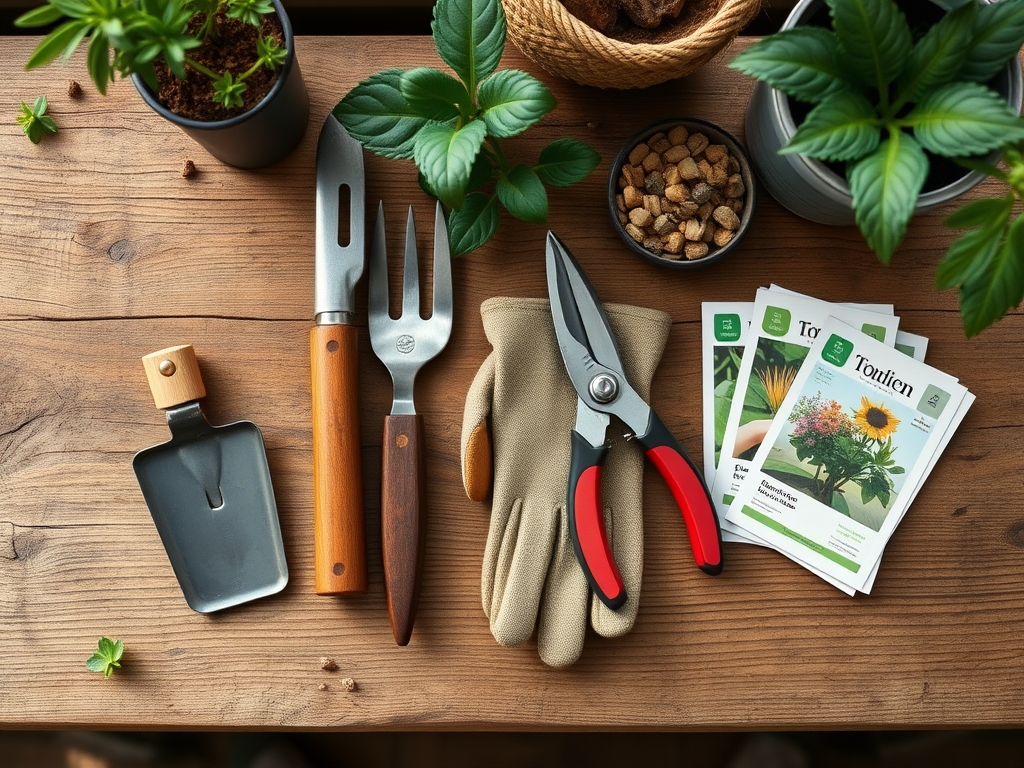
Pruning should be performed with bypass pruners for clean cuts that heal quickly. Remove any necrotic tissue (brown leaves) immediately to prevent the spread of fungal spores. For dividing clump-forming species, a hori-hori knife is essential for slicing through tough, fibrous root mats without causing excessive trauma to the primary root system. Every spring, top-dress the area with 2 inches of composted manure to replenish the nitrogen lost through rapid biomass production.
The Yield:
If your tropical design includes edible species like Musa (Banana) or Passiflora (Passionfruit), timing is critical. Bananas should be harvested when the fruit is plump but still green; they will ripen off the plant, which prevents the heavy stalks from snapping under their own weight. For ornamental flowers like Strelitzia (Bird of Paradise), cut the stems when the first orange bract emerges. To ensure "day-one" freshness, plunge the cut ends into 110-degree Fahrenheit water for ten seconds to break any air locks in the xylem before placing them in a cool vase.
FAQ:
How much sun do tropical plants need?
Most large-leaf tropicals require 6 to 8 hours of filtered sunlight. Direct afternoon sun in arid climates can cause leaf scorch and permanent vascular damage. Understory plants like ferns thrive in 70 to 80 percent shade.
Can I grow a tropical backyard in a cold climate?
Yes, by using hardy look-alikes like Musa basjoo or Fatsia japonica. These species survive temperatures down to 0 degrees Fahrenheit if the crown is heavily mulched with straw or wood chips during the winter dormancy.
What is the best mulch for tropical gardens?
Use coarse organic mulch like cedar or cypress. These materials break down slowly, provide a consistent carbon source, and maintain the soil moisture levels necessary for high transpiration rates in broadleaf species.
How do I prevent my tropical plants from yellowing?
Yellowing is usually a sign of nitrogen deficiency or overwatering. Ensure your soil has a pH of 6.0 and apply a balanced liquid fertilizer every 14 days during the peak growing season to maintain chlorophyll production.