6 Simple Ways How to Fix Salt Spray
Salt damage transforms healthy foliage into scorched, brown edges almost overnight, particularly in coastal gardens where winter road crews spread sodium chloride. The problem intensifies when wind-borne particles coat leaf surfaces and sodium infiltrates root zones, disrupting cellular osmotic balance. Understanding how to fix salt spray damage requires addressing both immediate foliar symptoms and long-term soil chemistry. The solutions range from mechanical removal to strategic leaching protocols that restore cation exchange capacity in the rhizosphere.
Materials
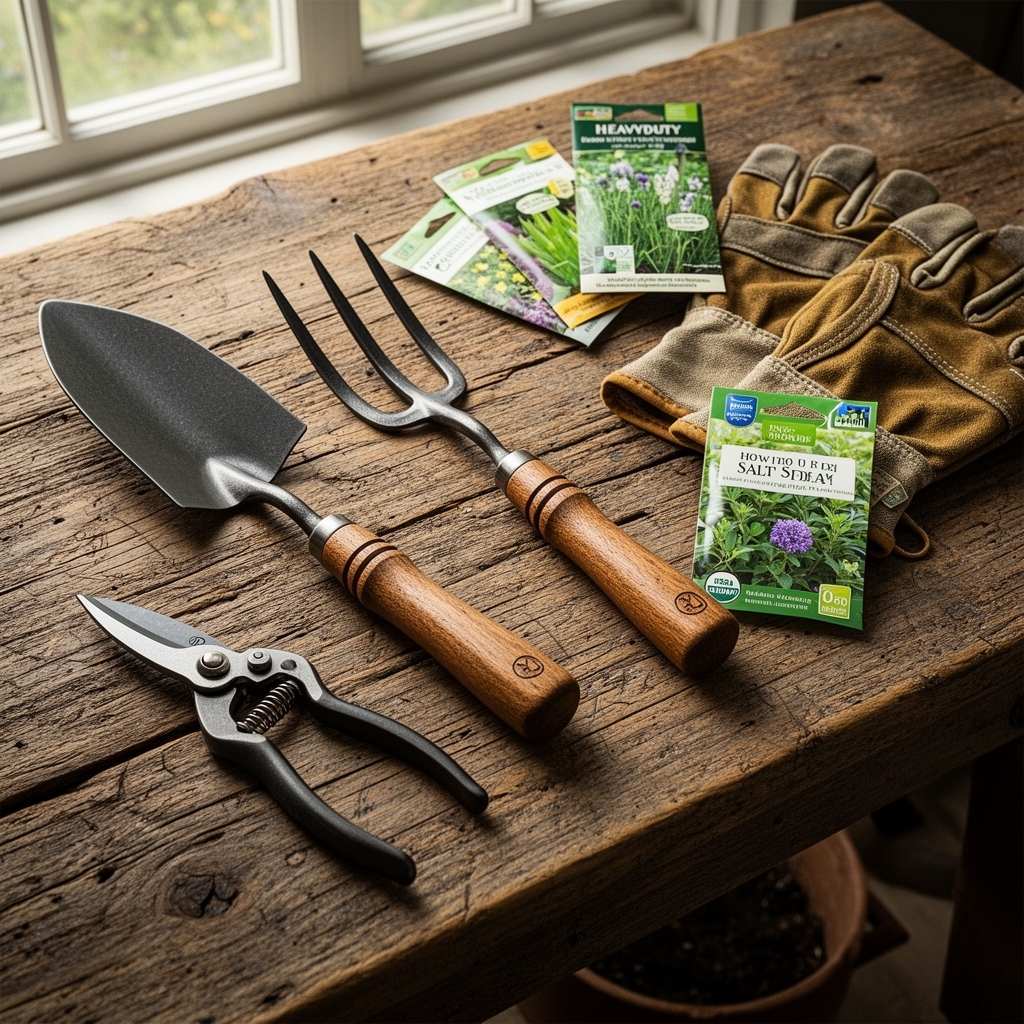
Begin with calcium sulfate (gypsum) at agricultural grade, which contains 23% calcium and 18% sulfur. This compound displaces sodium ions without altering soil pH. Obtain a balanced organic amendment rated 4-4-4 or 5-5-5 to rebuild depleted nutrient reserves after leaching. Purchase chelated iron (Fe-EDDHA) at 6% concentration for chlorosis correction in alkaline conditions.
Stock a backpack sprayer with a 3-gallon capacity for foliar rinses. Secure mycorrhizal inoculant containing Glomus intraradices at minimum 120 propagules per gram. A soil pH meter accurate to 0.1 units proves essential for monitoring post-treatment conditions. Procure humic acid concentrate at 12% concentration to improve soil structure and nutrient uptake efficiency.
Compost aged at least nine months supplies beneficial microorganisms that enhance salt tolerance. Elemental sulfur in prilled form lowers pH when sodium has created alkaline pockets above 7.5. Keep distilled water on hand for diluting foliar sprays to avoid introducing additional salts through municipal water supplies.
Timing
Execute initial rinse protocols within 24 hours of salt exposure for optimal recovery. Coastal Zone 7 through Zone 10 gardeners should treat immediately after winter storms when salt spray peaks. Zones 5 and 6 require attention in late winter, typically February through March, when road salt application concentrates along property edges.
Apply gypsum treatments four weeks before the last expected frost date. This window allows calcium displacement of sodium before spring root flush. Schedule soil amendments after danger of heavy rain passes; excessive precipitation within 72 hours of application dilutes treatment efficacy by 40%.
Plan mycorrhizal inoculation during dormancy or at bud break when auxin distribution supports new root hair development. Late-season applications after August 15 in northern zones fail to establish symbiotic relationships before winter dormancy. Southern gardeners in Zones 9-10 may inoculate through October when soil temperatures remain above 55°F.
Phases

Initial Assessment and Washing
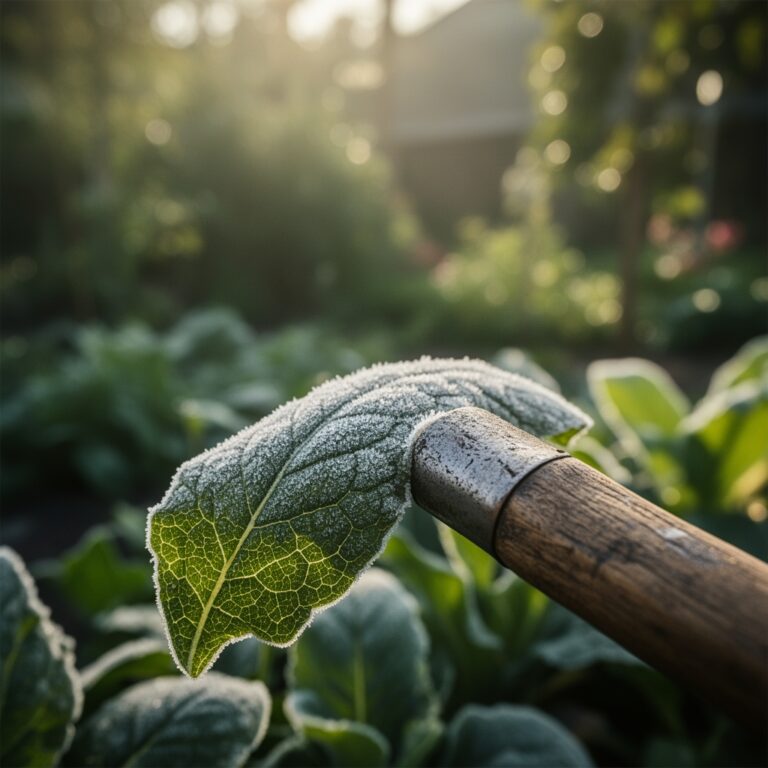
Inspect leaf surfaces for white crystalline deposits indicating salt accumulation. Spray affected foliage with distilled water at 40 psi, directing flow from top to bottom. This mechanical removal prevents further cellular dehydration. Repeat every three days for two weeks until no residue appears.
Test soil electrical conductivity; readings above 2.0 dS/m signal problematic salt levels. Extract a sample from 6 inches depth in the root zone for laboratory analysis of sodium saturation percentage. Values exceeding 15% require aggressive leaching.
Pro-Tip: Apply wetting agents containing yucca extract at 1 ounce per gallon before foliar rinses. Saponins reduce surface tension and allow water to penetrate waxy cuticles more effectively.
Soil Remediation
Broadcast gypsum at 40 pounds per 1,000 square feet across affected areas. Incorporate to 4-inch depth using a garden fork to maximize soil contact. Water deeply with 2 inches of irrigation to initiate calcium-sodium exchange at clay particle surfaces.
Monitor drainage; pooling water indicates compromised soil structure from sodium dispersion. Install French drains or till in coarse sand at 30% by volume to restore percolation rates above 0.5 inches per hour.
Pro-Tip: Inject liquid humic acid at 1 quart per 1,000 square feet through irrigation systems. Humic compounds chelate sodium and improve aggregate stability within ten days.
Biological Restoration
Mix mycorrhizal inoculant with transplant holes at 2 tablespoons per plant. Direct contact with root tissue establishes colonization within 14 days. Fungal hyphae extend effective root surface area by 700%, improving water and nutrient acquisition in stressed plants.
Top-dress with 2 inches of mature compost to introduce beneficial bacteria populations exceeding 1 billion colony-forming units per gram. These organisms produce exopolysaccharides that bind soil particles and reduce sodium mobility.
Pro-Tip: Prune damaged stems at 45-degree angles 1/4 inch above viable buds. This cut orientation prevents water accumulation and promotes callus formation with 30% faster wound closure.
Troubleshooting
Marginal Leaf Necrosis
Brown, crispy edges indicate osmotic stress from sodium accumulation in leaf margins. Flush soil with 6 inches of water over three hours to push salts below the 18-inch root zone. Apply foliar calcium chloride at 1 tablespoon per gallon weekly for four weeks to restore membrane integrity.
Interveinal Chlorosis
Yellow tissue between green veins signals iron deficiency induced by elevated soil pH. Drench root zones with chelated iron at 1 ounce per gallon, delivering 1 pint per square foot of canopy drip line. Repeat every 21 days until new growth emerges uniformly green.
Stunted Growth with Dark Foliage
Excess sodium blocks potassium uptake, concentrating nitrogen and creating dark, brittle leaves. Leach thoroughly, then side-dress with potassium sulfate at 1 pound per 100 square feet. This 0-0-50 amendment restores K:Na ratios above the critical 10:1 threshold.
White Crust Formation
Surface efflorescence indicates rising water tables carrying dissolved salts upward through capillary action. Improve drainage and apply 3 inches of organic mulch to break evaporative lift. Reduce irrigation frequency by 30% while increasing application depth to encourage downward water movement.
Maintenance
Irrigate established plantings with 1.5 inches of water weekly during active growth, delivered in single deep sessions. This schedule promotes root growth below the 12-inch zone where salt concentrations remain lower. Avoid daily shallow watering that keeps salts in the upper profile.
Test soil electrical conductivity monthly during the growing season. Maintain readings below 1.5 dS/m for salt-sensitive species and under 4.0 dS/m for tolerant cultivars. Perform additional gypsum applications at 20 pounds per 1,000 square feet when sodium saturation exceeds 8%.
Mulch beds with 4 inches of shredded hardwood bark to moderate soil temperature and reduce evaporative salt concentration. Refresh mulch annually each spring, keeping material 3 inches away from plant crowns to prevent moisture retention and fungal issues.
Fertilize with controlled-release formulations rated 14-14-14 at half manufacturer recommendations. Salt-damaged plants exhibit reduced nutrient demands for 90 days post-treatment. Excess fertility compounds osmotic stress in recovering root systems.
FAQ
How quickly does salt damage appear after exposure?
Foliar symptoms manifest within 8 to 12 hours as sodium disrupts stomatal function and cellular water balance. Root damage develops over 3 to 7 days as soil sodium displaces calcium from exchange sites.
Can salt-damaged plants fully recover?
Plants retain capacity for complete recovery if cambium tissue remains viable. Successful remediation within 48 hours of exposure yields 85% recovery rates. Delayed treatment beyond one week reduces survival to 40%.
What soil pH should I target after treatment?
Aim for 6.2 to 6.8 for most ornamentals and edibles. This range optimizes nutrient availability while maintaining sufficient calcium concentration to prevent sodium reaccumulation on exchange sites.
How long before retreatment becomes necessary?
Coastal properties require annual gypsum applications each autumn. Roadside plantings need assessment after each winter, with treatment when soil tests show sodium saturation above 6%.
Do native plants resist salt damage better?
Regional natives demonstrate 30% greater salt tolerance through adapted osmotic adjustment mechanisms and specialized salt gland structures. Species like Myrica pensylvanica and Juniperus virginiana thrive in coastal conditions without intervention.